This Sober October, we’re taking a closer look at one of the most meaningful tools in addiction recovery—and why its impact can last a lifetime.
What is so important about the Alcoholics Anonymous (AA) Big Book and the Narcotics Anonymous (NA) Basic Text? For someone who has never experienced addiction or participated in a 12-Step recovery program, these books might seem like collections of stories about people who struggled with alcohol or drugs. But they are much more than that. They are guides to understanding addiction, learning how recovery works, and discovering that a different life is possible.
At The Next Door Recovery (TNDR), these books are an important part of the recovery journey. During a recent conversation with members of our Clinical Team, we explored what makes this literature so meaningful, what women learn from it, and why many people in recovery hold on to their first book for the rest of their lives.
Understanding Addiction: “Why Can’t I Just Stop?”
One of the first things the AA Big Book addresses is a question that so many people struggling with addiction have asked themselves: Why can’t I just stop?
The book opens with a physician’s perspective, known as “The Doctor’s Opinion,” which introduces an explanation of alcoholism and why a person struggling with alcohol addiction may experience drinking differently from someone who does not. Then it introduces readers to the story of Bill Wilson, one of the founders of Alcoholics Anonymous.
For someone beginning recovery, these early chapters can be eye-opening. The reader may recognize her own thoughts, behaviors, and experiences in the words on the page. Things she has struggled to explain—or perhaps never fully understood about herself—begin to make sense.
The literature helps women explore the nature of addiction and recognize patterns in their own lives. It can be the beginning of understanding that addiction is not simply a matter of lacking willpower and that recovery requires more than deciding to stop using alcohol or drugs. That understanding can be an important first step toward healing.
The Power of Recognizing Yourself in Someone Else’s Story
A critical insight our Clinical Team wants people to understand is the connection between addiction, isolation, and mental health: Addiction can leave a person feeling profoundly alone. Shame, anxiety, depression, and the belief that no one else could possibly understand can become overwhelming. A woman may feel that she is the only person who has ever thought, felt, or behaved the way she has.
Then she begins reading. She discovers someone describing thoughts she has had herself. Someone who understands the desperation of wanting to stop but not knowing how. Someone who has experienced the same cycle of addiction, fear, and hopelessness. And suddenly, she realizes she is not alone.
That recognition is one of the most powerful aspects of recovery literature. The stories create opportunities for connection. They help women see that others have walked similar paths and found recovery.
As our Clinical Team explains, when someone begins to understand her addiction and connect with others who share similar experiences, it can also create an opening to address the mental health challenges that so often accompany substance use.
At TNDR, we recognize that substance use and mental health are deeply connected. Our evidence-based treatment addresses both, and recovery literature provides another opportunity for women to explore their experiences, develop self-awareness, and begin replacing isolation with connection.
The 12 Steps: A Guide for Learning How to Live in Recovery
AA and NA literature is not simply about understanding addiction. It also introduces a way forward. At the heart of both programs are the 12 Steps, a framework that encourages honesty, reflection, accountability, spiritual growth, and connection with others.
During TNDR’s 28-day residential treatment program, women begin learning the foundational principles of these steps. The first three steps focus on acknowledging that addiction has become unmanageable, coming to believe that help and healing are possible through a power greater than themselves, and making the decision to turn their will and lives over to the care of that Higher Power.
For women who have spent years struggling to control their addiction, these first steps can represent a profound shift. They begin to understand that recovery is not something they have to accomplish through willpower alone. But the first three steps are only the beginning.
One of the most important things to understand about AA and NA literature is that women are not expected to work through the 12 Steps alone.
As women continue their recovery beyond residential treatment, they are encouraged to find a sponsor—someone with lived experience in recovery who can walk alongside them as they work through the steps.
The fourth step, which involves taking a searching and fearless moral inventory, is particularly personal. At TNDR, our Clinical Team encourages women to approach this step with the guidance of a sponsor rather than attempting to navigate it on their own.
A sponsor offers more than an explanation of the literature. She offers encouragement, accountability, shared experience, and the understanding that comes from having walked a similar path.
The sponsor relationship often begins with the book itself. A sponsor and the woman she is guiding may sit together and read paragraph by paragraph, discussing what the words mean and how they relate to their own experiences. They move through the literature and the steps together, taking the time needed for reflection, conversation, and growth.
Some women work through the steps in several months. Others take years. There is no single timeline for recovery.
And while a woman may begin learning the first three steps at TNDR, she may revisit them with her sponsor as they begin working together. The foundation established during treatment helps prepare her for that next chapter.
The book provides the framework, but the relationship provides something equally important: connection. For women who have experienced the isolation of addiction, having another person walk alongside them can be transformative.
How Recovery Literature Becomes Part of Daily Life at TNDR
At The Next Door Recovery, women don’t just hear about AA and NA literature. They actively engage with it. Every afternoon, women gather with their peers for recovery literature studies. Together, they read, discuss passages, ask questions, and begin connecting the principles of recovery to their own lives.
Throughout their stay, women also participate in recovery meetings, where they hear from others who understand the challenges of addiction and the ongoing work of sobriety. These experiences help women become familiar with the literature, the 12 Steps, and the importance of community in recovery.
They also help prepare women for what comes next. When a woman leaves TNDR, her recovery journey continues. She may attend AA or NA meetings in her community, establish a relationship with a sponsor, and begin working through the remaining steps.
For women continuing into additional levels of care at TNDR, our team reinforces this process by encouraging sponsorship, asking about meeting attendance, and supporting their continued engagement in the steps.
The goal is not for a woman to leave treatment believing she has to figure out recovery on her own. It is for her to leave knowing that recovery is built through connection, community, and continued support. And that is another reason having her own AA Big Book or NA Basic Text matters.
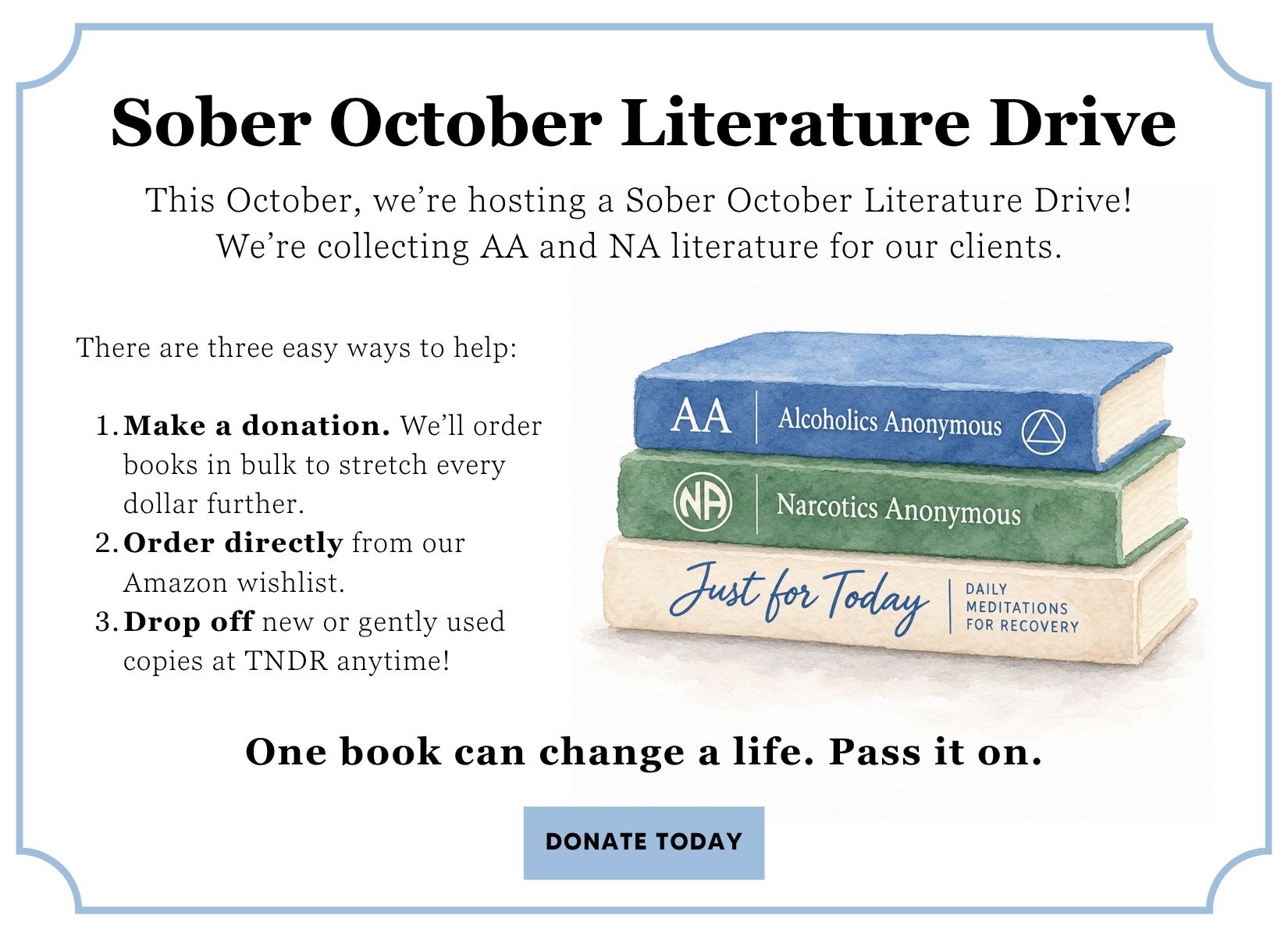
You can help TNDR provide this crucial literature for our clients.
One book can change a life. Will you help us be a part of that change? There are three easy ways to help:
Make a donation during our Sober October Literature here.
Order from our Amazon Wishlist and send books directly to TNDR. Visit our Wishlist here.
Drop off new or pre-loved books at TNDR anytime during business hours!